
DISCLAIMER
This guide and the content included is confidential and is intended for the exclusive use of the addressee. Any disclosure, reproduction, distribution, or other dissemination or use of this guide or any individual elements of this guide, including photos, drawings, pictures, descriptions, definitions, and other Biospace Inc. proprietary information is strictly prohibited without the express permission of Biospace Inc.
InBody offers a variety of products and services.
Professional Devices:
InBody 270, 380, 580, 770, and 970
Professional Body Composition Analyzer Line
InBody DSM-MFBIA body composition analyzer use InBody’s four pillars of technology to give professionals accurate and precise body composition measurements that are highly correlated to gold-standard methods.
BWA 2.0
Professional Body Water Analyzer
The BWA 2.0 is the ideal tool for researchers. Designed for use on people who are lying down, sitting, and standing, it provides standard outputs as well as advanced ones, such as total body water, visceral fat assessment, and other vital measurements.
BPBIO 220, 250, 320S, and 750
A Line of Clinically Validated Blood Pressure Monitors
The BPBIO 220 and the BPBIO 250 are designed for medical settings, while the BPBIO 320S and the BPBIO 750 are designed for self-testing.
BSM 170B and 270B
Digital Stadiometers
Fully automatic digital stadiometers that integrate with InBody’s line of body composition analyzers, delivering accurate height, weight, and BMI measurements.
InGrip
Hand Dynamometer
Handheld grip strength measurement device that integrates with InBody's line of body composition analyzers.
Consumer Devices:
InBody Dial H20 and H30
Smart Body Composition Scale with App Support
The InBody Dial H20 and Dial H30 measure your whole body with technology that is based on our professional devices. You will get accurate and personalized results in the comfort of your home.
InBody BAND 3
Fitness Wearable
The InBody BAND 3 is a wearable device that tracks your steps, sleep, and calories burned while using our biomedical technology to quantify personal body fat, muscle mass, and body fat percentage.
BP 170
At-Home Automatic Blood Pressure Monitor
The BP 170 is a clinically validated automatic blood pressure monitor that you can use to stay on the pulse of your cardiovascular health. A Bluetooth option is available (BP 170B).
PUSH Stadiometer
Handheld Stadiometer
PUSH is a handheld, next-generation stadiometer that uses an ultrasound sensor to measure an individual’s height with pinpoint accuracy.
Cloud Solution:
LookinBody Web
Cloud Database Management Platform
LookinBody Web is a cloud-based data management software that allows you to use any computer or tablet to access and analyze test data from professional InBody devices remotely.
App:
InBody App
Free Application
The InBody app gives you access to comprehensive wellness data that helps you understand your whole body health, build segmental balance, and make healthy changes. The outputs vary depending on the InBody model you test on.
Notes:
InBody is a worldwide leader in body composition and medical device technologies. We first established our name in body composition analysis with the InBody, a professional body composition analyzer that provides easy, quick, and precise testing. Today, we are taking our innovative mindset and exploring new fields, such as blood pressure management and personal health monitoring.
Our Goal
Educate
Since InBody is a highly specialized medical biotechnology company, many of the terms we use may be unfamiliar to most of our audience, be they Ph.Ds or high school graduates. We want to take every opportunity as a teaching moment
Empower
There will be obstacles and setbacks on the road towards better health. We always want to be positive, empathetic, and use inspirational language to uplift people.
Guide
We do not “sell” or push others to see our point of view. Instead, we help them achieve a point of understanding so they can make an informed decision.
Enlighten
Avoid grandiose claims or dramatization to emphasize how amazing we are. If we rely on the facts and speak and write with sincerity, then people will see our value.
We strive to help people achieve their epiphany moment through relevant, accurate content.
Respect
Health can be a controversial topic. We always want to be considerate and inclusive and make sure we always begin a conversation on common ground.
To Achieve These Goals, Our Content Must Be
Clear
Many of the terms we use are complex. We want to make sure our explanations are straightforward and understandable
Authoritative
People rely on us for important information regarding their health. That is why we make sure our content is factual and as objective as possible.
Accessible
The learning curve may intimidate people when they attempt to understand our technology and services, so we want to make sure the message is relatable.
However, we want to be careful that we DO NOT simplify our message to where it is no longer factually correct.
Appropriate
If possible, you want to be aware of your audience. The challenge is that we speak to both a B2B and B2C audience, across different industries.
When in doubt, try to speak to a general audience and avoid industry lingo or slang specific to a certain group or affiliation.
Honest
We always want to speak with respectful honesty, whether we are speaking about ourselves, our clients, or our competitors.
Notes:
At InBody, the goal with any piece of content that we create is to present professionals and consumers with accurate and carefully sourced information so they can make the right decisions for their personal health and the health of their clients, friends, and family. We help professionals and consumers achieve their goals by providing the right tools and information. We remember that our clients are on a health journey and it is our responsibility to lead them in the right direction.
In the early 1990s, Dr. Kichul Cha, our founder, recognized that BIA technology had significant medical potential. Testing on a BIA device in the 1980s was easy and non-invasive for the patients, making regular body composition testing possible. The issue was that devices during this time produced results that were inaccurate and imprecise. Dr. Cha realized that if he improved the methodologies behind BIA devices, he could make accurate body composition testing accessible for millions of people. In 1996, he founded InBody. Drawing from his extensive background in mechanical engineering, he set out to develop something better.
Two years later, the first InBody DSM-MFBIA Body Composition Analyzer was born. He developed his 4 pillars of technology, which have been the guiding principles all the way from his earliest model to the brand-new devices of today. The InBody raised the standard in ease of use, accuracy, and reproducibility for bioelectrical impedance analysis testing.
Today, InBody has grown from a small biotech startup in South Korea with a focus on professional body composition analyzers to a multinational corporation with branches and distributors in more than 100 countries and a wide-ranging product line for both professionals and consumers.
The catalyst behind this tremendous growth has been a commitment to innovation and education. Our clients and users trust us to provide precise, useful, and accurate data and devices that are easy-to-use and visually beautiful.
Mission
To provide biomedical technology that simplifies the understanding of your health and wellness
Promise
Commitment: We promise to help our clients make a positive difference in the lives of their patients.
Quality: We promise to provide products of the highest quality through rigorous testing.
Support: We promise to provide our clients with our team’s full support, including our dedicated clinical, marketing, and product support departments.
United States Trademark
InBody (stylized)
INBODY
See What You’re Made Of
InBody Challenge
Biospace
PUSH
Go Beyond Steps
INBODY BAND
“The InBody Man”
BWA
INBODY BAND (stylized)
BPBIO
LookinBody
Copyrights (Design)
Result Sheet
Website/InBody Blog
Company Name
For Example
No: Inbody, INBODY
Yes: InBody
InBody is trusted by top hospitals.
Company Website
For Example
No: inbodyusa.com, www.inbodyusa.com
Yes: inbody.com, www.inbody.com
Visit www.inbody.com for more information.
Professional Line Devices
For professional devices, we put a space between InBody and the model as a general rule. Please be aware that there is no space between “320” and “S” for the BPBIO 320S.
Please refer to Terms & Definition for the product list.
For Example
No: InBody Machine, InBody Scanner, InBody Scale, InBody Body Composition Analyzer*
Yes: The InBody**, InBody device, OR InBody (unit number) Body Composition Analyzer
InBody 580 Body Composition Analyzer
Notes:
*For readability, DO NOT follow InBody with Body Composition Analyzer, such as “InBody Body Composition Analyzer”.
You can put DSM-MFBIA in between like “InBody DSM-MFBIA Body Composition Analyzer”.
**Always refer to professional body composition analyzers: 270, 380, 580, 770, and 970, but NOT our other products, such the BWA 2.0, BPBIO 320S, or Dial H30.
Consumer Line Devices
For home devices, we capitalize the model name, as a general rule. When written, put a space between “InBody” and “the model” except the PUSH.
For Example
No: InBodyDialH30, H30
Yes: InBody Dial H30
No: InBody Band 3, Band 3
Yes: InBody BAND 3
No: InBody PUSH, Push
Yes: PUSH
Software
For home devices, we capitalize the model name, as a general rule. When written, put a space between “InBody” and “the
model” except the PUSH.
For Example
No: LBWeb, LB120
Yes: LookinBody Web, LookinBody 120
Services
For Example
No: InBodyApp, The App
Yes: InBody App
The InBody Test
For Example
No: InBody Scan
Yes: InBody Test
Accessories
For Example
No: InBody tissue
Yes: InBody Tissue
Recent Updates to Internal Terms/Phrases
For Example
No: Four Core Technology
Yes: Four Pillars of Technology
No: bio-electrical
Yes: bioelectrical
No: bio-medical
Yes: biomedical
No: DSM-BIA, DSM MF-BIA
Yes: DSM-MFBIA
The Result Sheet
For Example
No: InBody Results Sheet, Results Sheets
Yes: InBody Result Sheet, Result Sheets
Always capitalize sections of the Result Sheet. Only capitalize Result Sheet outputs when in reference to or in the context of the Result Sheet*.
For Example
Muscle-Fat Analysis
Segmental Lean Analysis
Body Composition History
His InBody Result Sheet showed that he increased his Skeletal Muscle Mass while decreasing his Percent Body Fat.
In all other cases, use lower case/upper case for outputs as you normally would.
For Example
Percent body fat
Visceral fat
Fat free mass
Through diet and exercise, he was able to increase his skeletal muscle mass and decrease his percent body fat.
Numbers
Spell out one to ten.
For Example
She had five apples.
Exceptions
4 Component Model
4 Pillars of Technology
5 Cylinder Model
8-Point Tactile Electrode System with Thumb Electrodes
Units of measurement including but not limited to kHz, lb, years old, ft, and inches.
Use commas in large numbers
For Example
1,000,000
Serial Comma
Always use the serial comma, also known as the Oxford comma. This helps clear up confusion.
For Example
The InBody Result Sheet includes measurements for body fat percentage, muscle mass, and total body water.
Capitalizations After Colons
When a colon introduces a list of things, DO NOT capitalize the first word after the colon unless it is a proper noun.
When a colon introduces a phrase or an incomplete sentence that is meant to add information to the sentence before it, DO NOT capitalize the first word after the colon unless it is a proper noun.
When a colon introduces a complete sentence, capitalize the first word after the colon.
Notes:
To clarify, ending a list with “...lions, tigers, and etc.” would be redundant because “et” in et cetera means “and”. Therefore the correct usage would be “...lions, tigers, etc.”.
DO NOT use passive voice
Use the active voice to make your writing concise and clear.
EXCEPTION: Drawing attention to a person or thing affected by action.
DO NOT use slang and jargon
Keep the language professional. Do not substitute “&” for “and”.
EXCEPTION: The use of “&” is acceptable for titles and section headings as a design element, common abbreviations (R&D), inside tables and parenthesis, and company names (AT&T).*
DO NOT use contractions
The content we write is formal and for an international audience that may not understand contractions.
EXCEPTION: Informal content geared towards U.S. audiences (blogs, social media posts, etc.).
DO NOT use hyperbole and absolute statements
For Example
No: The InBody line of body composition analyzers is the most advanced, accurate, and precise line of BIA devices because of InBody’s four pillars of technology
Yes: The InBody line of body composition analyzers is an advanced, accurate, and precise line of BIA devices because of InBody’s four pillars of technology
No: We are InBody, the worldwide leader in body composition technology.
Yes: We are InBody, a worldwide leader in body composition technology
No: InBody is the only company in the world that can combine convenience, accuracy, and reproducibility into one easy-to-use device
Yes: InBody combines convenience, accuracy, and reproducibility into one easy-to-use device
Be Consistent:
Stick to templates, copy patterns, and style points outlined in this guide.
Be Specific and Concise:
Avoid vague language and unnecessary modifiers. Cut the "fluff".
Be Positive:
Use hope as a motivator rather than fear.
You can mention avoiding/improving complications related to heart disease, cancer, poor lifestyle choices, etc., but:
DO NOT mention disability, dying, death, etc.
DO NOT be critical or judgemental of the reader.
Be Cautious:
Word choice is very important when describing body types and health conditions.
When in doubt, always use the proper medical term:
Instead of “fat” or “big”, use “overweight” or “obese”.
Instead of “skinny”, use “underweight”
DO NOT use the word “normal”. Use “healthy average”.
DO NOT use the word “ideal” or “perfect”. Use “recommended range”
Be Evergreen:
When possible, strive to write content that is “evergreen,” or usable in the future, rather than just at a certain point in time. For example:
Say “InBody was founded in 1996”, rather than, “InBody was founded 26 years ago”.
Say “InBody technology has been validated in thousands of studies”, instead of, “InBody technology has been validated in 5,500+ studies”, as this metric is continually changing.
It is acceptable to abbreviate an InBody output after the output has been used and spelled out fully in a previous sentence/section with the acronym in parenthesis.
For Example
These equations calculate your Basal Metabolic Rate (BMR) using your weight, with some adjustments for height, age, and gender.
Used abbreviations sparingly, as we DO NOT want a confusing “alphabet soup” of unfamiliar abbreviations in a sentence or section.
Examples of Acceptable Abbreviations
Basal Metabolic (BMR)
Bioelectrical Impedance Analysis (BIA)
Body Composition Analysis (BCA)
Body Fat Mass (BFM)
Body Mass Index (BMI)
Direct Segmental Measurement, Multi-Frequency Bioelectrical Impedance Analysis (DSM-MFBIA)
Dry Lean Mass (DLM)
Extracellular Water (ECW)
Extracellular Water/Total Body Water Ratio (ECW/TBW)
Fat Free Mass (FFM)
Intracellular Water (ICW)
Multi-Frequency Bioelectrical Impedance Analysis (MFBIA)
Percent Body Fat (PBF)
Segmental Lean Analysis (SLA)
Skeletal Muscle Index (SMI)
Skeletal Muscle Mass (SMM)
Total Body Water (TBW)
Total Body Water/Fat Free Mass (TBW/FFM)
We understand that for many people, the general concept of body composition (and other important health metrics like blood pressure) and its role in health can be confusing.
That is why we assume the role of the trusted and knowledgeable teacher/guide.
We approach every interaction with clients and consumers as a teaching opportunity. We want to give people the knowledge they need to make the best decision for their health.
Using a conversational yet professional voice, we try to be as clear and concise with our message to deliver value to our clients and consumers.
We DO NOT push a view or promote our superiority.
We present the facts and let our technology and services speak for themselves.
We always want to be patient and supportive and allow the client and consumer to make the right decision for their health, business, or community.
Regardless if you are writing an email, blog, case study, etc., the voice will always be the same.
InBody’s default tone is always within the range of “professional”, but always try to learn who you are talking to, their emotional state, and the channel of communication (email, blog, etc). Use this information to adjust the tone.
Another factor is if you're writing for a B2B Fitness, B2B Medical, or B2C audience. If it is B2B, the tone will change depending on the industry. For example, the tone used to communicate with a gym owner who wants to motivate his personal training clients may differ from the tone that you will use to communicate with a Lymphedema Specialist who wants to help her dialysis patients manage pain.
It also matters whether the audience is familiar with InBody products. When creating copy for B2B audiences that are largely familiar with InBody, it’s not necessary to explain InBody’s technology; instead, you can focus on what’s new with InBody, a service or product’s specific selling points, etc. With consumer audiences, however, you may need to do more education, as these audiences tend to be more general and less familiar with InBody and BIA technology.
If you cannot find out any information about your audience, err on the side of caution and use both a professional and a straightforward tone.
Devices
When referring to both consumer and professional devices by name, refer to devices as “the” rather than “a”
For Example
Designed with traveling professionals in mind, the InBody 270 is portable yet features the accuracy and precision customers expect from InBody.
InBody Test
The InBody Test only refers to a test taken on the professional body composition analyzer.
When referring to the InBody Test, we use “an”, “the” or just InBody Test depending on the context.
For Example
Why should you take an InBody Test?
Know the proper testing steps and how you can adequately prepare for your InBody Test. The InBody Test takes less than 60 seconds.
Any other test using an InBody device should be referred to simply as “test” or the generally accepted industry term.
For example, a test taken on the BPBIO 320S is a blood pressure screening or blood pressure test.
Result Sheet
When we explain the results of an InBody Test, the official term is “Result Sheet Interpretation”. For the fitness industry, it is acceptable to use “Result Sheet Breakdown”
For Example
During the Result Sheet Interpretation, the specialist pointed out an imbalance between the right and left leg. After the InBody Test, I received a Result Sheet Breakdown from a personal trainer.
Empirical Data is information based on trends seen within a specific group and then applied to the general population.
All methods of body composition testing use some form of empirical estimations. Therefore it is incorrect to say that InBody does not use Empirical Data/Empirical Estimations or to say that InBody does not use any estimations/pre-set data. What is true is that InBody has developed technological innovations that help overcome the reliance on certain types of empirical data for more accurate and precise results. Stick to one of the following options, depending on the format, for the explanation.
For Example
“InBody does not utilize empirical estimations based on factors of age, gender, ethnicity, athleticism, or body shape to calculate its results.”
OR
“No Empirical Estimations*
*InBody does not utilize empirical estimations in its measurements. For more information, please refer to: https://inbodyusa.com/general/technology/.”
Understanding empirical data can be difficult for the average person.
When in doubt, include the link to the tech page so that the reader has access to resources to further their understanding.
Normal vs. Average vs. Recommended
We DO NOT use the adjective “normal” to describe results like “normal ECW/TBW” or “normal range for body fat percentage”.
InBody devices cannot make a diagnosis or determine normalcy. InBody devices accurately and precisely measure muscle, fat, and water to give you measurements that a trained professional can use to determine a baseline or “average”. We provide recommended ranges to give you the context behind your results and track trends. In place of normal or normal range, use average and recommended range. So, rather than using “normal” or “normal range”, use “average” or “recommended range”.
InBody Result Sheet and Test
InBody Result Sheet: InBody Result Sheet: Printout from a test on an InBody Professional Body Composition Analyzer that contains in-depth analysis of the body’s muscle, fat, and water. See link for more info
InBody Test: A body composition analysis that uses Direct Segmental Measurement, Multi-Frequency Bioelectrical Impedance Analysis (DSM-MFBIA) to provide a detailed breakdown of your weight in terms of fat-free, fat, and water.
InBody Result Sheet Outputs
Arm Circumference: Measures the distance around the arm.
Basal Metabolic Rate (BMR): Minimum number of calories needed for life-sustaining bodily function at a resting state.
BIVA Graph: Useful for research, a BIVA graph compares the raw resistance and reactance values measured in the body.
Body Balance Evaluation: Assesses whether the muscle mass in each body part is balanced, by evaluating the difference between the top and bottom halves of the body as well as the right and left sides.
Body Cell Mass: The sum of an individual’s Intracellular Water and Protein, which is the total amount of cells that make up the active tissues in the body. Body Cell Mass includes muscle tissue, organ tissue, Intracellular and Extracellular Water, and bone tissue.
Body Composition History: Graph that tracks Weight, Skeletal Muscle Mass, Percent Body Fat, and ECW/TBW over the most recent eight tests. This section can also be formatted to display the individuals entire history.
Body Fat - Fat-Free Mass Control: Suggested changes in Body Fat and Fat-Free Lean Body Mass to obtain a healthy average for your gender (15% for males, 23% for females).
Body Fat History: Graph that tracks Weight, Body Fat Mass, Abdominal Fat, Subcutaneous Fat, and Visceral Fat over the most recent eight tests. This section can also be formatted to display the individual’s entire history.
Body Fat Mass (BFM): The sum of all the fat in the body including the subcutaneous fat, visceral fat, and fat surrounding/within muscles.
Body Mass Index (BMI): Calculation of Weight (kg) divided by your Height squared (m2).
Body Water Composition History: Graph that displays Weight, Total Body Water, Intracellular Water, Extracellular Water, and ECW/TBW over the most recent eight tests. This section can also be formatted to display the individual’s entire history.
Bone Mineral Content: The amount of minerals in the bones, composed of calcium, sodium, and potassium. InBody’s estimates of bone mineral content are correlated to the gold standard (DEXA).
Calorie Expenditure of Exercise: Total calories burned by 30 minutes of exercise, based on an individual’s current weight.
Dry Lean Mass (DLM): The sum of protein and mineral content in the body minus the water content.
ECW/TBW Analysis: Ratio of Extracellular Water to Total Body Water. An important indicator of body water balance.
Extracellular Mass/Body Cell Mass: Compares Extracellular Mass to Body Cell Mass to determine the hydration status of an individual’s Fat-Free Mass.
Extracellular Water (ECW): The total amount of water outside the body’s cells.
Fat-Free Mass (FFM): Also known as lean body mass (LBM). The sum of all of the non-fat components of the body, including the muscles, skin, bones, ligaments, tendons, blood, and internal organs.
Fat-Free Mass Index: A measurement of an individual’s muscle relative to their height.
Fat Mass Index: A measurement of an individual’s body fat relative to their height.
Intracellular Water/Fat-Free Mass (ICW/FFM): Impedance values of the right arm, left arm, trunk, right arm, and left leg at varying levels of frequencies.
Impedance (Z): Impedance values of the right arm, left arm, trunk, right arm, and left leg at varying levels of frequencies.
InBody Score: The InBody Score is an overall rating of your body composition and health. Any score above 80 is considered positive.
Intracellular Water (ICW): The total amount of water inside the body’s cells.
Leg Lean Mass: Sum of the Fat-Free Mass in the right and left legs. Low leg lean mass has been linked to increased diabetic risk.
Minerals: Generally, the amount of bones and teeth an individual has (except for small amounts of ionic components dissolved in body water). Estimated based on an individual’s muscle mass and physical development status.
Nutrition Evaluation: Protein and mineral recommendations for an individual, based on their body composition analysis.
Percent Body Fat (PBF): Percentage of Body Fat compared to body weight. Average range for PBF is 10-20% for males and 18-28% for females.
Protein: A major structural component of all the cells in the body, especially muscle cells, which comprises 12% to 15% of an individual’s body composition. Also includes the body’s organs, bones, teeth, hair, blood, and skin. Another way to see it is as the weight of an individual's Fat-Free Mass, minus their Dry Lean Mass.
Reactance (X): Opposition to the current from the cell membrane. Associated with overall cell health and Phase Angle.
Recommended Calorie Intake per Day: The approximate number of calories an individual needs to consume daily, based on their age, gender, height, weight, and body composition.
Segmental Body Water Analysis: Graph that shows how much body water (lb or L) is contained in each of the body’s five segments.
Segmental ECW Analysis: Chart that displays Extracellular Water (ECW) for each of the body’s five segments.
Segmental ECW/TBW: Graph that displays the ECW/TBW in each of the body’s five segments.
Segmental Fat Analysis: Distribution of fat in each part of the body (in lb) in comparison to the healthy average (100%).
Segmental ICW Analysis: Chart that displays Intracellular Water (ICW) for each of the body’s five segments.
Segmental Lean Analysis (SLA): Graph that shows the amount of Fat-Free Mass (lb or kg) in each body segment (top bar) and the ability of each segment to support the individual’s overall weight (bottom bar).
Segmental Phase Angle: An indicator of cellular membrane integrity by each body segment.
Skeletal Muscle Index (SMI): Ratio of the amount of skeletal muscle mass an individual has for functional movement according to their height. Provides a comparable assessment of muscle mass between individuals.
Skeletal Muscle Mass (SMM): Muscle that is attached to the bones (skeleton) and controls posture and voluntary movement.
Skeletal Muscle Mass/Weight (SMM/WT): An index that expresses the percentage of an individual’s Skeletal Muscle Mass relative to their body weight. Used to determine obesity status.
Total Body Water (TBW): The sum of Intracellular Water and Extracellular Water in the body. Bioimpedance technology uses TBW to obtain Fat-Free Mass and Body Fat Mass.
Total Body Water/Fat-Free Mass (TBW/FFM): The percentage of fat-free body mass that is comprised of water.
Total Body Water/Weight (TBW/WT): An index expressing the percentage of an individual’s Total Body Water compared to their weight.
Visceral Fat Level: Numerical depiction of the amount of fat located in the abdominal region between the organs. Levels 1-20 represent 10-200 cm2.
Visceral Fat Area: The area of fat located in the abdominal region between the organs in cm2.
Waist Circumference: Measures the distance around the waist.
Weight: The sum of Body Fat Mass and Fat-Free Mass.
Whole Body Phase Angle: An indicator of cellular membrane integrity in the whole body.
Result Sheet Ranges
Healthy Average for Body Fat Range: 10-20% male, 18-28% female
Average BMI: 18.5 - 24.9 kg/m2
Average ECW/TBW: 0.36 - 0.39
Healthy Visceral Fat Level/Area: ≤10 or ≤100 cm2
Average Whole Body Phase Angle: 5-7° male, 4-6° female
BIA SMI Cutoffs for Sarcopenia*: ≤7.0 kg/m2 male, ≤5.7 kg/m2 female
Result Sheet Related Terms
Fat-Free Mass: All components of the body that are not fat. Also known as Lean Body Mass.
Five Body Segments: The human body is divided into the right arm, left arm, trunk, right leg, and left leg.
Subcutaneous Fat: Fat located under the skin.
Visceral Fat: Fat located within the abdominal cavity and directly around the organs. Excess visceral fat is often related to health issues.
4 Pillars of Technology: The four key components of InBody DSM-MFBIA Technology that include: Multiple Frequencies, 8-Point Electrode System, Direct Segmental Measurements, and No Empirical Estimations.
5 Cylinder Model: A model of measuring the body as five separate cylinders (arms, legs, and trunk) for bioelectrical impedance analysis measurements.
8-Point Tactile Electrode System with Thumb Electrodes: An electrode system developed by Dr. Kichul Cha and used by InBody to independently measure the impedance of each of the five different body segments by using multiple frequencies.
Accuracy: The closeness of a measurement to a known value or standard.
Bioelectrical Impedance Analysis (BIA): A method of measuring body composition by applying alternating low-level electrical current(s) through the water in the body to measure impedance.
Capacitors: Composed of two electrically conductive plates separated by an insulator that temporarily slows down the electrical current. In the human body, the cell membrane acts as a capacitor.
Correlation: A mutual relationship or connection between two or more things.
Current: Rate of flow of electrons.
Direct Segmental Measurements: Independent measurements of impedance for each of the body’s five segments (left and right arms, legs, and torso).
Direct Segmental Measurement, Multi-Frequency Bioelectrical Impedance Analysis (DSM-MFBIA): An advanced method of bioelectrical impedance analysis that uses multiple frequencies and independent measurements of impedance for each of the body’s five segments to analyze body composition.
Dr. Kichul Cha: Founder, CEO of InBody Co., Ltd. He developed technological innovations to overcome the technical limitations of traditional BIA to improve the accuracy, precision, and ease of body composition analysis.
Edema Index: Ratio of extracellular water to total body water (aka ECW/TBW).
Electrode: A conductor through which electricity enters or leaves an object, substance, or region.
Empirical Data: Information based on trends seen within a specific group and then applied to the general population.
Empirical Equations: A mathematical expression used to predict outcomes based on empirical or population data.
Empirical Estimations: An approximate calculation based on empirical data.
Frequency: The rate at which an electrical current changes direction per second.
Impedance (Z): The resistance value measured when electrical currents are applied throughout the body. Based on the measured data, key components of body composition can be measured.
Impedance Index: Developed by Hoffer et al., it is an equation (Height2 / Impedance) that demonstrates that total body water and bioelectrical impedance are highly correlated.
Hertz (Hz): A unit of frequency equal to one cycle per second.
Kilohertz (kHz): 1000 hertz.
Megahertz (MHz): 1,000,000 hertz or 1000 kilohertz.
Multi-Frequency Bioelectrical Impedance Analysis: The use of several currents at varying frequencies to measure impedance. Provides improved sensitivity of body water measures compared to single frequency analysis.
One Cylinder Model: The traditional model of bioelectrical impedance analysis that views the human body as one cylinder.
Ohms: A unit of measurement for impedance.
Precision: The closeness of two measured values of the same object to each other.
Reproducibility Rate: The similarity between test results obtained under controlled conditions.
Resistance (R): The opposition (or resistance) to an electrical current that is provided by a substance through which the current is attempting to flow.
Single Frequency Bioelectrical Impedance Analysis: The use of one frequency to measure impedance.
Trunk: The area of the body comprising the chest, abdomen, and between the pelvic area.
Trunk Impedance: The trunk comprises about 50% of an individual fat-free mass making it important to measure this area separately to improve the sensitivity and accuracy of the measurement.
Voltage: The difference in electric potential between two points. Creates a force that makes electrical charges move.
Bariatrics: Branch of medicine that deals with the causes, prevention, and treatment of obesity, generally focused on severe cases.
Cardiology: Branch of medicine that deals with the diagnosis and treatment of diseases and disorders of the heart and blood vessels.
Cachexia: Loss of muscle mass specifically associated with disease.
Corporate Wellness: Any workplace health promotion activity or policy designed to support healthy behavior in the workplace and to improve health outcomes.
Diabetes: A group of diseases that affects how your body uses glucose.
Disease Prevention: A focus on reducing the risk of developing common health problems such as heart disease, stroke, diabetes, and cancer, through diet and lifestyle choices. Also known as preventive medicine.
Frailty: A clinically recognizable state of age-associated decline in physiological function and increased risk of poor health outcomes.
Health: Complete state of physical, mental, and social wellbeing.
Hypertension: High blood pressure is defined at or over 130/80 mmHg.
Intensive Care: Treatment that caters to patients with severe or life-threatening illnesses and injuries; includes those injuries and illnesses that require life support equipment in order to ensure typical bodily functions. Also known as critical care medicine.
Lymphedema: Swelling that generally occurs in the arms and/or legs that is caused by a blockage in the lymphatic system; often a result of removal or damage to the lymph nodes during cancer treatments.
Malnutrition: Lack of sufficient nutrients in the body caused by poor diet, digestive conditions, or another disease.
Metabolic Syndrome: A cluster of conditions that increase the risk of heart disease, stroke, and diabetes.
Nephrology: Branch of medicine that deals with the treatment of kidney disease and preservation of kidney health.
Nutrition: Branch of study that examines the nutrients in food, how the body uses nutrients, and the relationship between diet, health, and disease.
Obesity: BMI > 30kg/m2. Body fat percentage greater than 25% for males and 32% for females.
Oncology: Branch of medicine that deals with the prevention, diagnosis, and treatment of cancer.
Rehabilitation: The restoration or improvement of physical function through therapeutic means.
Physical Therapy: Treatment that improves a patient’s physical function through examination and physical intervention, rehabilitation, and patient education.
Pediatrics: Branch of medicine that focuses on the medical care of infants, children, and adolescents.
Personal Training: A practice in which a fitness expert prescribes an exercise program based on a client’s strengths and weaknesses to improve their physical fitness.
Sarcopenia: Severe loss of muscle mass, often associated with age or malnutrition.
Sarcopenic Obesity/Skinny Fat: Characterized by high body fat and low muscle mass, but normal BMI.
Body Composition
Body Composition: A method of describing what the body is made of by differentiating the components of the body, including fat, protein, minerals, and body water.
Body Composition Analysis (BCA): An examination of the body’s components that may include fat, protein, minerals, and body water levels, the quantity and percentage of each component, and the ratio between different components.
Skinfold Calipers: A measuring tool used to measure the thickness of a fold of your skin and the underlying layer of fat.
Bioimpedance Spectroscopy: A bioimpedance approach that uses a largely varied number of frequencies to differentiate between ECW and ICW.
3D Scanning: A technique that uses scanning technology to produce a three-dimensional model of the tester’s body and estimates the tester’s body composition based on imaging analysis.
Bioelectrical Impedance Analysis: A method of measuring body composition by applying alternating low-level electrical current(s) through the water in the body to measure impedance.
Hydrostatic Weighing: A technique used to calculate body density using water immersion which is then used to estimate the tester’s body composition.
Air Displacement Plethysmography: A technique to calculate body density using air displacement which is then used to estimate the tester’s body composition.
Direct Segmental Measurement, Multi-Frequency Bioelectrical Impedance Analysis (DSM-MFBIA): An advanced method of bioelectrical impedance analysis that uses multiple frequencies and independent measurements of impedance for each of the body’s five segments to analyze body composition.
Magnetic Resonance Imaging (MRI): A medical imaging technique that uses a magnetic field and computer-generated radio waves to create detailed images of the organs and body tissues.
Computed Tomography (CT) Scan: A medical imaging technique that combines multiple X-ray measures taken from different angles to produce a noninvasive picture of the inside of an object/person.
Dual Energy X-Ray Absorptiometry (DXA): A high-precision X-ray scan that is primarily used for bone density scans but can be used to estimate soft tissue such as lean muscle and fat tissue.
Related Terms
Gold Standard Method: A diagnostic test that is the best methodology available under reasonable conditions.
Soft Tissue: All non-bone components in the body. See definition for DXA
Professional Line
InBody 270: Professional body composition analyzer created for traveling professionals. See link for more info.
InBody 380: Professional body composition analyzer that offers advanced outputs and portability for traveling professionals. See link for more info.
InBody 580: Professional body composition analyzer that provides advanced segmental measurements of muscle and fat and body water analysis. See link for more info.
InBody 770: Professional body composition analyzer with medical grade body composition and body water analysis. See link for more info.
InBody 970: Professional body composition analyzer with extensive, customizable outputs for multi-industry versatility. See link for more info.
BWA 2.0: Medical-grade body water analyzer designed for supine or seated testing using attachable electrodes to accommodate frail or immobile users. Has a research mode with extensive outputs. See link for more info.
BPBIO 220: Manual blood pressure monitor that meets updated standards for the use of mercury-free blood pressure monitors within the medical field. See link for more info.
BPBIO 250: Clinically validated and fully automated blood pressure monitor designed for use in hospitals and medical clinics. See link for more info.
BPBIO 320S: Clinically validated automated blood pressure monitor that is designed for accurate self testing. See link for more info.
BPBIO 750: Wheelchair-accessible, automatic, and user-friendly blood pressure monitor that has a self-adjusting cuff and sensor. See link for more info.
BSM 170B: A manually operated digital stadiometer that integrates with InBody’s professional body composition analyzers and deliveres quick, accurate height metrics. See link for more info.
BSM 270B: Fully automatic digital stadiometer that provides effortless height measurement and syncs data with the InBody ecosystem of products. See link for more info.
InGrip: Handheld dynamometer with advanced features to provide precise and accurate handgrip strength measurements. See link for more info.
Consumer Line
InBody Dial H30: Body composition scale based on InBody’s professional technology for testing at home with almost double the outputs of the Dial H20. See link for more info.
InBody Dial H20: Personal body composition scale based on InBody’s professional technology for accurate home testing. See link for more info.
PUSH Stadiometer: Handheld stadiometer that uses an ultrasound sensor for effortless height measurement. See link for more info.
InBody BAND 3: Activity tracker that allows you to measure body composition. See link for more info.
BP 170: At-home automatic blood pressure monitor. Bluetooth option available (BP 170B). See link for more info.
Accessories
InBody Tissue: Wipes designed to enhance electrical conductivity between the hands and feet with the hand and foot electrodes. Used before an InBody Test.
BPBIO 220/250 Cuff: A patented one-touch cuff for arms that are 7-9 inches in circumference. (Large and medium-size cuffs are included with the purchase of a BPBIO 220 or BPBIO 250.)
Services
LookinBody Web: Cloud database management software that can be used on your computer or tablet to remotely manage, analyze, and share data from the InBody. See link for more info.
LookinBody 120: Data management software that lets you manage, analyze, and share data.
InBody App: A free app that lets you access your personal health data whenever you need to.
Name
Gary Morales
Background
• Fitness Franchise Owner
• Former Personal Trainer/Athlete
• Stable cash-flow and membership base
Demographics
• Skews Male
• Age Range: 25-54, Average Age: 40
Challenges
• Wears many hats within the gym, may object to anything that has a significant learning curve.
• Needs something that will help differentiate the facility from the competition and take it to the next level.
• The facility has limited floor space so any new addition must have proven ROI.
Goals
• Wants to distinguish the facility from the competition and increase profits.
• Wants to validate programs, improve retention rate, and grow membership base.
Quote
“You have to keep your facility fresh, innovative, and make sure you have the latest and greatest equipment.”

Name
Dr. Dan Jones
Background
• Independent Private Practice
• Primary Care/Bariatric Physician
Demographics
• Skews Male
• Average Age: 49.3
Challenges
• Does not know how to incorporate new technologies to improve patient care without increasing costs and financial risk.
• Finds it hard to encourage patients to come in for a preventive care visit and make lifestyle changes.
• Does not have time to keep up-to-date on the latest advancements in body composition technology.
Goals
• Wants to inspire patients to make better lifestyle choices.
• Wants to test patients, review and interpret results, and give actionable advice all in the same visit.
• Wants to leverage technology to provide better services to patients.
Quote
“Most patients do not visit a doctor unless there is something wrong. Patients do not treat their primary care provider as a source for preventive care.”

Name
Melissa Lee
Background
• Doctoral or professional degree (which means she requires less education about InBody’s outputs than other audiences)
• May work for a drug/biotechnology/medical device company or an academic institution
Demographics
• Skews Female
• Average Age: 41
Challenges
• Needs a better way to monitor subjects’ fluids during studies.
• Needs more granular, detailed data about the impact of various interventions.
Goals
• Wants a thorough, 360-degree understanding of how her experiments affect subjects’ health.
• Wants information that can help her improve disease treatments and outcomes.
Quote
“It can be challenging to capture comprehensive data about your subjects during clinical trials, especially when you’re receiving information
from multiple sources. It would be helpful if I had a single tool that was capable of analyzing a large number of biometrics.”

Name
Jen Kowalski
Background
• Bachelor’s degree
• Works at a larger company (1,000-10,000 employees)
Demographics
• Skews Female
• Average Age: 46
Challenges
• Needs a new, fun way to encourage employees to engage in wellness-boosting activities like exercise and meal planning.
• Needs a method for quantifying employees’ wellness progress that is tangible and can be used for people of all body types and fitness levels.
Goals
• Wants to lower the company’s healthcare costs.
• Wants to improve employee morale & retention.
• Wants to increase productivity and reduce absenteeism.
Quote
“Every year we sponsor a marathon, but as time goes by, fewer employees are participating. We need some new ideas for getting people involved.”

Name
Cassie Smith
Background
• Casual gym-goer that exercises 1-3 times a week
• Has disposable income to spend on health
• Understands that health is important and wants to improve their well-being
Demographics
• Male or Female
• Age range: 25-34
Challenges
• Does not know which exercise and nutrition plan best fits their personal needs.
• May have enjoyed initial success with diet and exercise but finds it difficult to
maintain long-lasting results.
Goals
• Wants to develop a personalized nutrition and fitness plan that fits their
lifestyle and will help them achieve their goals.
Quote
“After my initial success, I found that I started to put some of the weight back on.
I needed to rethink how I approached my fitness and nutrition.”

Millions use InBody technology in countries around the world. As we continue to reach more people through our content,
it is important that we make it accessible to everyone. We write all of our content in standard, straightforward English so
that is understandable for non-native English speakers. It is much easier for a translator to communicate ideas written
in straightforward, uncomplicated sentences.
Here are some tips for writing for international audiences:
Use Active Voice
We always aim for the active voice, but it is especially important when writing for translation.
Use the Subject-Verb-Object Sentence Structure when possible, especially for spec sheets, manuals, and other technical materials.
This structure is not used by all languages, but it is widely recognized.Use Positive Words When Talking About Positive Situations
For example, because a question like “Do you not think she did a great job?” contains a negative word “not”, a non-native English speaker may interpret its implication as negative. A better version would be, “She did a good job, right?”
We create both structured and unstructured content. Below, we will focus primarily on structured content that follows standardized templates. These templates make writing and reading easier. They also help create consistency for our brand across multiple channels. The following sections cover examples of when you will use a structured content template. When reviewing the templates, keep in mind that the template has to be reusable, so it is best to focus on the high-level goal of the content type, rather than the message of a particular piece.
We follow what we outlined in the Brand Voice and Brand Tone sections, so be sure to refer here and here. Above all, know who you are speaking to and understand the channel you are using to get that message across, and then adjust the tone accordingly.
With all of our content we want to adhere to our Writing Goals: Educate, Empower, Guide, Enlighten, and Respect; refer here
Notes:
Click here to visit our InBody Blog
Tone
Unlike most of our content, blog posts will speak to a B2C, general audience. Write like the person reading the blog has little or no prior experience with or understanding of the topic. Take advantage of the long-form format to develop complex ideas and concepts using examples and credible sources. Remember to adhere to the writing goals.
Blogging vs. Journalism
Our articles are heavily researched and vetted by an internal Clinical Research department, and we stand by the sources that we choose. While there is some overlap between the two styles, it is important to recognize that we are writing blog articles and that we are not conducting journalism. We are blogging to promote body composition; therefore, we have an explicit bias.
The major difference is that when there are inconsistencies, we DO NOT necessarily need to present both sides equally. We DO NOT always need to acknowledge that inconsistency is present just for the sake of doing so if it is going to muddy the impact of the greater point we are trying to make.
Another difference is that the articles must not raise issues just to raise them. Journalistic articles sometimes raise more questions than they answer. We want to do the opposite – answer questions, not raise them. Make strong points and provide actionable, teachable takeaways.
Point of View:
The InBody Blog is written in the 2nd person singular tense (you, your).
You may never write in the 1st person singular (I, my) or 1st person plural (we, our).
Our preferred source is peer-reviewed studies listed in the PubMed database of the National Center for Biotechnology Information (NCBI). PubMed’s URL is here.
The best blog articles will be made up of 100% PubMed sources, and many of our best-performing blogs are sourced this way.
You can search the PubMed Database directly for sources, but another way that is often easier is to use Google Scholar as your primary search engine for reliable sources.
Note on the age of a particular piece of research: Generally, try to find articles that have been published within the last 10 years.
There will be exceptions to this rule; this is a general guideline.
Also included in Tier 1 are any articles previously published by InBody. However, an over reliance on our own content hurts our
overall trustworthiness. InBody articles should not comprise more than 20-30% of all citations in an article. You may trust them, but use them sparingly.
Most statements beyond basic truths about the body (muscle contains water, running burns calories, etc) will need to be sourced.
Our dedication to sourcing our arguments is what separates us from other blogs
Notes:
There are many online sources for health and medical information; some trustworthy, some not. InBody categorizes online sources into three “tiers of reliability”.
These are facts or positions posted by government entities or extremely reputable non-profit organizations. What makes these different from Tier 1 sources is that they DO NOT always show their sources and the authority of the article comes from the writers themselves, who usually have advanced degrees and/or certifications
Examples of Acceptable Tier 2 Sources:
If you come across an article written or published by one of these (or similar) organizations, these are usually OK to use. Make sure to double check that they are not, to the best of your knowledge, promoting misleading/disproven/pseudo-sciency “health facts”
These are for-profit blogs and companies in the health and wellness space that offer incredibly well researched articles that are made of nearly 100% Tier 1 (PubMed) sources. There are very few acceptable Tier 3 sources and should be used as a last resort, when it is impossible to find an acceptable Tier 1 or 2 source.
Examples of Acceptable Tier 3 Sites:
Because Tier 3 sources use PudMed sources to back up their arguments, Tier 3 sources are often a great vehicle to find acceptable Tier 1 sources. However, a Tier 3 source can sometimes misuse/misinterpret a PubMed article. Always read the abstract of a Tier 1 article to make sure it supports your argument before using it.
DO NOT use these sources to cite or support a health/fitness claim:
Any popular magazine (Men’s Health, Women’s Health, Cosmopolitan, SELF, etc.).
Any website that writes articles in order to sell something, but does not back their claims with studies.
Health, fitness, and lifestyle websites (e.g. Livestrong.com).
A personal blog written by a writer that does not have recognized credentials.
Rule of Thumb
If it looks questionable, makes claims without sourcing, or just gives you a bad impression, DO NOT cite/link to it.
Formatting Basic Structure:
Main Title <h1> tag
Section Headings <h2> tag
Section subheadings <h3> tags*
Blog Example:
The Effect of Sleep on Body Composition
Breaking Down Sleep
Sleep and Muscle Development
Encouraging Muscle Growth
Stopping Muscle Growth
Sleep and Fat Loss
Calories In
Calories Out
Sleep and Your Body Composition
Paragraph Structure/White Space
Paragraphs should be no more than 3 sentences long. 1-sentence paragraphs that are long, complex can be acceptable.
Bold Text
Bold text should be used frequently to highlight significant analyses or takeaways. Typically, you should use bold text to highlight an interesting sentence clause; highlighting an entire sentence is rare.
Blog Example of the Effect of Sleep on Body Composition
“In plain speech, because cortisol has a catabolic (muscle-reducing) effect,
increased cortisol levels due to lack of sleep can threaten your muscle development. Once you add in the reduced GH and testosterone levels produced by lack of sleep, the overall effect of not sleeping enough can seriously hamper your efforts to gain muscle and increase your Lean Body Mass.
Notes:
*Section subheadings and subsections are not always necessary if the main section is short enough.
(<400 words or so)
Highlight the claim in the anchor text.
For Example
Research has shown that during both restricted sleep and complete sleep deprivation, cortisol levels were elevated the following evening by 37-45%, potentially “accelerat[ing] the development of metabolic and cognitive consequences of glucocorticoid excess.”
Anchor Text for InBody Blog Articles
Highlight the topic of the linked article, when possible:
For Example
Changing your body composition is not a single goal: it is two. Increasing your Fat-Free Mass (by increasing skeletal muscle) and reducing your Fat Mass are both positive changes in body composition, and both are affected by sleep.
You may use a wide variety of punctuation and stylizations to break up blocks of text and help the reader navigate through the post, including:
Bullet lists
Numbered lists
Block quotes
Italics
DO NOT use:
Underlined text
Strikethroughs
We rely heavily on good quality, free-to-use imagery for our blog articles. Each blog article will need a banner image, which will double as the thumbnail when shared on social media. In addition to the banner image, each article will need 4-5 supporting images to support the concept or example in the text.
Free images can be found on the following websites. This is not an exhaustive list; other free sites can be found online:
The resolution used on the blog for images is 1200 x 800. When downloading images, ensure that the dimensions exceed these resolutions so they may be edited to the appropriate size.
Alt Text
To make InBody’s blog content accessible to blind or low-vision people who use screen readers, add alt text to all photos. Here are some guidelines:
The best alt text consists of a short, clear sentence.
Don’t include “image of” or “photo of”.
Briefly describe the photo’s most important elements, for example: “A woman in workout gear uses the InBody 770.”
Writing About Calories
Calories (and counting calories) is one of the most controversial topics in health today. It is also unavoidable when writing about body fat, body fat percentage, and body composition. We generally ascribe to the thermodynamic theory of calories, aka “calories in/calories out.” This position holds that you will gain weight if your caloric intake (calories in) exceeds the amount of calories expended during the day (calories out).
Writing About Fat Loss
Fat loss is a very controversial topic, and there are virtually endless fad workouts, diets, and supplements promoted on the Internet that propose to help people lose body fat. We take the view that if you want to lose body fat, you must use more energy than you take in. This view has been validated by countless medical studies. Simply put, you must eat less than your body’s daily caloric requirement to lose body fat. This is referred to as a “caloric deficit.”
Writing About “Fast” or “Slow” Metabolisms
We DO NOT subscribe to the idea that metabolisms “slow down with age” or that some people have inexplicably “fast metabolisms.” Instead, we explain metabolism as a function of one’s body composition combined with their activity level. Research has shown that a person’s Basal Metabolic Rate (BMR) is tightly linked with their amount of Fat-Free Mass; therefore, a person with greater Lean Body Mass will have a larger metabolism – not a “faster” one – because his or her body will require more energy than someone who has less Fat-Free Mass.
Writing About "Normal"/Healthy Body Fat Percentage Ranges
Unlike BMI, there are no medically accepted/official ranges for what constitutes a “normal/healthy” body fat percentage range. InBody has set its own healthy ranges for both men and women.
These are:
• Men: 10-20%
• Women: 18-28%
You may also reference the ranges set by ACSM or ACE. These ranges are similar to those of InBody.
Writing About BMI
The Body Mass Index was originally designed as a way to understand the relative weights of a population, and it is still used in this way. It has come under increasing scrutiny as a poor tool for measuring individuals’ health and wellness. We do not recommend using BMI for health assessment in any of our articles, nor would we use studies that link specific health concerns to BMI, especially if the sample size is relatively low.
Writing About Aging
It is true that people tend to lose muscle mass as they age. However, our position is that much of this loss of muscle mass is due to inactivity. Muscle decline and aging are highly correlated, but we DO NOT take the position that it is a causal link. Older individuals can preserve and gain lean muscle using the same diet and fitness techniques as a younger person.
Writing About BIA Technology
The InBody device uses a method of measuring body composition called bioelectrical impedance analysis (BIA). It is one of several ways of determining body composition, which also include hydrostatic weighing, DEXA/DXA, skinfold calipers, and others. BIA technology can be a controversial topic, and we DO NOT explicitly recommend BIA devices in our blogs because it is a complex issue. We recommend that people get their body composition tested, but we DO NOT say how.
The goal of our email marketing is to either inform, update, or deliver value to subscribers.
These are the most common types of content we send by email:
Product Updates: Important information regarding InBody devices
Blog Emails: The newest blog article
Email Newsletter: Updates on the latest blog, past/future events, and new resources
Tone
Remember that you are a guest in the inboxes of our subscribers. We want to keep the tone of our email unassuming, simple, and helpful. It allows us to further the relationship with our subscribers and let them know that we are here if they need us without trying to be overbearing.
Use Hierarchy
Most readers will be scanning your emails or viewing them on a phone. Put the most important information first.
Avoid Unnecessary Links
Limit the number of links to one per email. If it is a newsletter, limit it to one per section. Use the hyperlinked text to highlight an important point. Remember, your goal is for the reader to click on your call to action. The hyperlinked text and CTA will use the same link.
Use Alt Text
Include an alt tag to describe the information in the image for subscribers who cannot download the image.
Segment Your Audience
At InBody we speak to many different types of audiences. What we want to send to gym owners will be much different to what we want to send to a bariatric specialist. Always write your email with a specific audience in mind.
Notes:
We always practice opt-in email marketing. That means that we send emails to people who have specifically signed up to receive it. Not only does this help maintain the reputation of the company, but it is required by the law. To learn more, visit this link.
Formatting Basic Structure:
From
Either marketing@inbody.com or the individual.
Subject line
Keep your subject line short, descriptive, and in title case. Be aware that email clients display only the first few words so get to the point quickly.
Preheader text
Summarize what the message contains.
Hero Image
Use images free for commercial use that are high quality, bright, and colorful. DO NOT just download images that you found without first checking they are free of copyright.
Free images can be found on the following websites.
This is not an exhaustive list; other free sites can be found online.

Notes:
Use the preview mode to see your email in different email clients. An email may look different in Gmail compared to Outlook. One tip is to keep the text and image of the email in one column so that the format and design stay consistent across different email clients.
Headers
Keep the headline to the point and enticing. It should lead the reader to the body copy. If you are sharing an article from our blog or any other source, share the title as they write it.
For Example
Clean Eating vs. If It Fits Your Macros (IIFYM): What You Need to Know
Body Copy
Write with purpose and keep your content concise. A paragraph should not have over three sentences. The body copy should encourage the reader to click the call to action.
Call to Action
End your email or section with your call to action. Make the next step clear so the reader knows exactly what happens when they click the link. Always use the title case and a command verb to start your call to action.
For a blog article: Read “Clean Eating vs. If It Fits Your Macros (IIFYM): What You Need to Know”
For a specific offer: Put My Facility on the Referral List!
Footer
All InBody campaigns follow CAN-SPAM. Include a permission reminder, mailing address, and permission reminder in the footer of each newsletter.
DO NOT forget to include social media buttons in the signature.
Perspective
When referring to InBody, use “InBody” or “We”.
When referring to the reader, use “you” or “your” to speak directly to the reader.
Mailing Address:
13850 Cerritos Corporate Dr., Unit C,
Cerritos, CA 90703, USA
Headline
Write the headline as if it were a front-page article. Focus on the intended audience and why they would care about the main point of the press release.
Body Copy
Keep it short and concise and have every paragraph flow to the main, overarching point.
Quotes
Quotes should advance the main point of the press release and sound natural. Eliminate fluff and buzzwords. Get quotes from directors or managers
Boilerplate
InBody is an innovation-focused company with a goal of creating a better world for today and future generations to come. Their mission is to provide biomedical technologies that simplify the understanding of health and wellness. People trust InBody to provide accurate, actionable insights. InBody’s award-winning, medical-grade devices are used by professionals and consumers in medical, fitness, research, and corporate wellness industries. The company delivers biomedical technologies and services in over one hundred countries with ten international branch offices and a global network of distributors. To learn more about InBody and their mission visit: www.inbody.com
Source
Notes:
We want to use the press to help promote the mission and values of InBody, our technologies and services, and important company news. The focus should always be on InBody.
We DO NOT want to use the press to mention other competitors or individuals whose views may conflict with our own. Always stick to our talking points and present thoughtful, well-researched information. The goal is to attract journalists who have not heard about InBody to contact us for more information.
Q: What does InBody do?
A: InBody is a global leader in body composition testing and medical products, manufacturing devices with patented technology that analyze a person’s body composition, blood pressure, and more. InBody's body composition analyzers feature direct segmental multi-frequency bioelectrical impedance analysis (DSM-MFBIA) and an eight-point tactile electrode system to measure an individual’s body composition with accuracy and precision aligned with gold standard methods. Test results are shown in an easy-to-understand printout that features key health indicators like total body water, percent body fat, and muscle mass.
Q: Who uses InBody devices?
A: InBody products are used by consumers and professionals in multiple industries including: wellness, research, the public sector, corporate wellness, fitness, professional sports, and medical. To learn how leading companies are using InBody, read some of our case studies at https://inbodyusa.com/case-studies/.
Q: When was InBody formed?
A: In 1996, Dr. Kichul Cha founded InBody in South Korea. In 2000, InBody opened its first overseas subsidiary in California.
Q: Where is InBody’s corporate office?
A: InBody has offices all over the world. Its U.S. office is located in Cerritos, California, a suburb of Los Angeles.
Notes:
Please use these talking points as a guide for media inquiries and materials.
Q: How do InBody products work?
A: InBody products use DSM-MFBIA (Direct Segmental Measurement, Multi-Frequency Bioelectrical Impedance Analysis), an eight-point tactile electrode system, multiple frequencies to measure your body composition analysis for results including but not limited to fat-free mass and body fat percentage.
Q: What makes InBody unique?
A: InBody's professional body composition analyzers use multiple frequencies, an eight-point tactile electrode system, and direct segmental measurements which allows us to measure body composition without using empirical data based on age, gender, ethnicity, athleticism, and body shape. To learn more information about InBody technology, visit https://inbodyusa.com/general/technology/.
These technologies combine to allow InBody devices to offer one of the easiest, quickest, and most precise tests for body composition analysis. InBody’s consumer products, which include an at-home body composition scale and fitness wearable, are powered by the same technology.
Q: What is BIA?
A: BIA (bioelectrical impedance analysis) sends a small electrical current through the body. Historically, BIA has generated a wide range of results. However, technological advancements such as multiple frequencies, eight-point tactile electrode system, and direct segmental measurements, pioneered by InBody have greatly improved the accuracy and precision of the BIA devices. InBody products are highly correlated with gold standard methods such as DEXA.
Q: Are InBody devices accurate?
A: Yes, InBody devices produce accurate results and are highly correlated with gold standard methods like DEXA
Notes:
Please use these talking points as a guide for media inquiries and materials.
InBody Professional Products
Q: What do the InBody professional product lines consist of?
A: The InBody professional body composition analyzer line consists of the InBody 270, InBody 570, InBody 770, InBody 970, and BWA 2.0.
The InBody professional blood pressure monitor line consists of the BPBIO 220, BPBIO 250, BP BIO 320S, and the BPBIO 750.
InBody also offers a digital stadiometer, the BSM 270B.
Q: What are the differences between InBody products?
A: The InBody BWA 2.0 is a body water analyzer as well as a body composition analyzer, and it's the only InBody device that can accommodate non-standing or amputee populations. It provides extensive outputs that are highly useful for researchers and medical professionals, especially those who perform fluid management. The biggest differences between the InBody 270, InBody 570, and InBody 770 can be found in Product Comparison Guide. The InBody 970 provides in-depth analysis and features six Results Sheets.
Unlike the BPBIO 250, BPBIO 320S, and BPBIO 750, the BPBIO 220 is a manual blood pressure monitor. It’s mercury-free and clinically validated. With five measurement modes and a patented one-touch cuff, the BPBIO 250 is designed for use in hospitals and medical clinics. The BPBIO 320S is a user-friendly blood pressure kiosk that seamlessly fits into hospitals, clinics, and pharmacies, while the BPBIO 750 offers wheelchair-accessible design and a self-adjusting cuff and sensor for ambidextrous self-testing.
For more information, contact InBody at contact@inbody.com.
Q: What kind of information can you receive from an InBody device?
A: An InBody Result Sheet can provide you with information like:
• Visceral Fat Area: Visceral fat surrounds organs and is associated with diseases like cancer, diabetes, and heart disease. Stay within the healthy range to minimize your risk.
• Segmental Fat Analysis: Understand how many pounds of fat are in each segment (right arm, left arm, right leg, left leg, and torso). Fat levels are sorted into under, recommended, and over ranges.
• Segmental Lean Analysis: Understand how many pounds of muscle are each segment, identify imbalances between limbs.
• ECW/TBW Analysis: Easily identify swelling in the body.
• Percent Body Fat
• Basal Metabolic Rate
Q: Is the information on an InBody Result Sheet accurate?
A: Yes, InBody devices produce accurate results and are correlated with gold standard methods like DEXA
InBody Consumer Products
Q: Are there InBody devices available to consumers?
A: We released a fitness wearable, the InBody BAND 2, in 2017. In 2019, InBody launched the InBody H20N, an at-home body composition scale. We also offer the BP 170, an at-home automatic blood pressure monitor, and the PUSH Stadiometer, a handheld, next-generation stadiometer.
Q: What is body composition?
A: Body composition describes the percentages of fat, bone, water, and muscle that make up a person’s body.
Q: Why body composition and not BMI (Body Mass Index)?
A: Although BMI is more commonly used, body composition provides a more accurate representation of someone’s health. BMI is simply a ratio of height to weight and does not account for the amount of muscle or fat a person has in his or her body.
Notes:
Please use these talking points as a guide for media inquiries and materials.
Tone
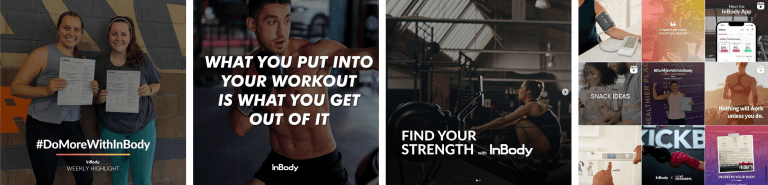
We use social media for fun interactions; and it is perfectly acceptable to be personable and light-hearted. We want to reach out to our end consumers directly, and, as such the tone will be more conversational than what you will find on our website or marketing materials. However, we DO NOT want to confuse our own voice with InBody’s voice.
Here are our most active accounts and what we usually post on each:
Facebook: Share content like the InBody blog and repost mentions. Click here to view the account.
LinkedIn: Share pictures of workplace events and activities. Click here to view the account.
Instagram: Post inspirational quotes, answer direct messages, and repost mentions. Click here to view the account.
For the most part, we keep our social media copy short:
Facebook: No limit, but aim for 1-2 short sentences
LinkedIn: No limit, but aim for 1-2 short sentences.
Instagram: No limit, but try to keep it to 1 sentence or a short phrase. Feel free to throw in an emoji.
When using hashtags that contain multiple words, #LikeThisOne, capitalize the first letter of each word. This makes them more readable for audiences that can see as well as blind or low-vision people who use screen readers.
Notes:
We use social media to build relationships with InBody users, answer questions, and inspire. But know that the nature of social media creates opportunities to say the wrong thing, put off customers, and damage our brand. As such, we are careful and deliberate in what we post to our social channels. This section lays out how we strike that delicate balance. When in doubt, refer to the sections covering brand voice here and writing goals here.
Below are some common questions that we encounter on Social Media and how to answer them:
Q: Can the InBody assess a person’s level of hydration?
A: Unfortunately, with one test the InBody is not able to tell hydration vs. dehydration. This is due to the fact that although fluid balance (as seen through ECW/TBW) may be altered, fluid balance is something that differs between each individual and can vary based on the amount of SMM, diet, hydration, oxygen efficiency with blood, hormones, as well as other factors, and, therefore, it is harder to tell with one test if ECW/TBW is reflective of hydration or dehydration. However, InBody has been seen to be effective in tracking changes in hydration as seen through this study in wrestlers undergoing a dehydration protocol. Lastly, due to the fact that there are different types of dehydration, it is a little harder to use ECW/TBW to monitor hydration. Typically with dehydration from not consuming enough water, or dehydration from exercise, we may see the ECW/TBW a little lower. However, if there is more sodium loss than water loss, this can cause the ECW/TBW to be higher. However, generally a higher ECW/TBW is reflective of retained fluid.
As you can see, the InBody should not be used to assess hydration based on one InBody Test; it can, however, be used to provide information on a user’s relative hydration by tracking hydration/dehydration systematically. Otherwise, InBody can also be used to track relative hydration by understanding where an individual’s typical total body water lies; deviations from that norm can be used as a reflection of general hydration or dehydration.
Q: How would a metal plate in your body affect your results?
A: There are no known safety concerns testing with metal implants. However, because metal is highly conductive, the presence of metal implants (such as knee replacements) in the body will cause increases in lean mass readings in the segment in which the metal is located; in this case it would be in whichever leg has the knee replacement.
This skew can vary depending on the size and composition of the implant itself. However, because this effect will be consistent from test to test, the initial test may be used as a baseline to track changes in body composition over time.
Q: Where is the nearest testing location?
A: (Instagram) Hi there, please click the link in our bio to visit our Nearest Testing Locator Map.
(Facebook) Hi there, here is the link to our Nearest Testing Locator map: https://inbodyusa.com/support/nearest-testing-location/
Q: How do I purchase an InBody Device?
A: (First ask if they currently reside in the US)
International Inquiry
Hi there, please fill out our product inquiry form and a representative will reach back out in 48 hours! https://www.inbody.com/global/customer/ProductInquiry.aspx
US Inquiry
Hi there, please fill out our product inquiry form and a representative will reach back out in 48 hours! https://learn.inbodyusa.com/sales/contact
Notes:
For questions and answers not listed here, please visit this link for more info.
After reading the case study, the reader should be able to answer:
How do I relate to the client?
What are the challenges of the client?
How did InBody satisfy the needs of the client?
What goals did InBody help the client achieve?
Tone
We want to keep the tone of our case studies sophisticated yet down to earth. Remember that case studies are not an opportunity to sell, but rather an opportunity to show an understanding of the needs of our client and their industry.
Notes:
Case studies are a deep dive into the experience that our clients have had with InBody’s devices and services. They are real-life examples of how we helped them overcome a problem to achieve their goals. Remember, InBody is not the star of the story; we are merely a guide on their journey. If this was Star Wars, InBody is Yoda, and the client is Luke Skywalker. The goal is to make the client’s struggles as relatable as possible and show how InBody provided the perfect solution to their problem.
Background Paragraph
This space will give you an opportunity to give more background of the business and the client, that you may not be able to fit in the flow of the case study. This is important to establish credibility for the client. Use italicized text for this section to separate it from the rest of the case study.
Intro Paragraph
Help the reader understand the business model of the client’s organization and the challenges that the client may face that are universal to the industry. Make sure you explain why the challenge had to be solved and the possible consequences if the challenge was not solved.
Body Paragraph #1
Use this space to explain how the individual encountered InBody, what their first impressions were, along with anything that may have stood out, and the deciding factor in choosing InBody.
Body Paragraph #2
Show how the client used InBody’s device or service to overcome their challenges. Give specific examples of how they are using the device day-to-day. Make sure you explain the specific benefits that the client has gained.
Body Paragraph #3
Share personal anecdotes/stories of success or any epiphany moments using InBody devices or services.
Conclusion
Recap the specific benefits and important points covered above. If possible, share their insights on the future and how we may play a role.
Quotes
Use large quotes throughout the case study to drive the narrative forward and to highlight important points.
Notes:
The following format is just a general guide. Use your best judgment in terms of order and flow. Always make sure we focus the case study on the client and his/her business model. InBody plays a supporting role in enhancing their processes but we are never the hero.

Notes:
We use our company logo for both print and digital marketing campaigns.

Clear space should always surround the logotype by the height of the lowercase “o”, as it appears in the InBody logotype.
Notes:

For smallest legible print, DO NOT scale down less than 0.472 inches (12 millimeters).

DO NOT distort height/width

DO NOT italicize logo

DO NOT use low resolution file

DO NOT use non-brand colors

DO NOT place in similar color background

DO NOT change logo alignment

DO NOT alter logo size ratio

DO NOT use complex backgrounds/patterns

DO NOT add stroke to logo
Notes:
DO NOT alter the company logo.

Notes:
DO NOT change the tagline to upper case or proper case.
Tagline is in medium gray, refer to secondary brand color codes.
Clear space should always surround the logotype and tagline by the height of the lowercase “o”, as it appears in the InBody logotype.

Notes:
For smallest legible print, DO NOT scale down less than 0.984 inches (25.4 millimeters).
Clear space should always surround the logo symbol by 1/4 the height of the logo symbol.
Our company logo symbol visually represents a person testing on the InBody. The figure is in white on top of InBody Red. (Refer here to primary brand colors)

DO NOT invert or change or change colors other than represented above. We use this logo only as a design element.
DO NOT replace InBody logotype with logo symbol on print or digital materials.
Notes:
For smallest legible print, DO NOT scale down less than 0.276 inches (7.0 millimeters).
When designing alongside a partner’s logotype (whether Layout 1 or Layout 2), use the height of the “B” in InBody as a height reference.
Layout 1

Layout 2

Layout 3

DO NOT use the full height of InBody logotype. If the partner’s logo is a logo symbol or mark, use the full height of the InBody logotype (refer to Layout 3).
DO NOT use the InBody logo symbol for partnerships (refer to page 65 for InBody logotype clear zone).
Notes:
When a partner’s minimum size requirement (for a logotype or symbol) is larger than InBody’s requirement, defer to their minimal size requirement for better legibility.
DO NOT use “InBody x LOGO HERE” or “InBody LOGO HERE” format.
Standard



The professional and consumer devices will follow the logo design format (seen above) for print and digital material with three exceptions (shown below).
Exceptions



Units

The black and italicized logo is specific to the professional body composition analyzer line and appears physically on the device.
DO NOT use this design format for any of our device/service logos whether for print or digital materials.
Software

The “Cloud Database” icon appears before “LookinBody Web” to represent the cloud database software.
Service

Use this logo for InBody’s corporate wellness program.
Notes:
DO NOT recreate or redesign product logos.
To see the device logos in written format, see here for specific format and instructions.
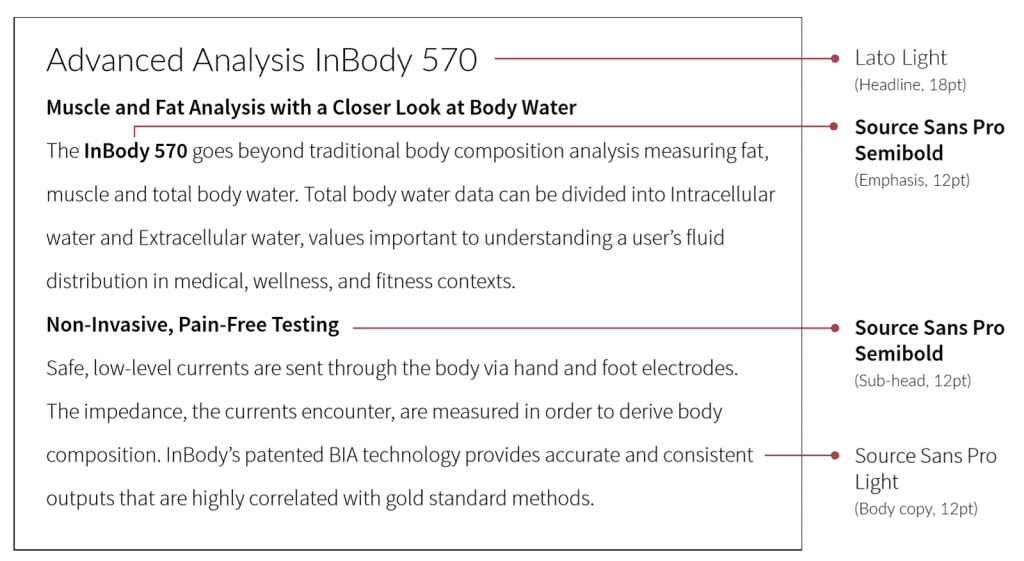
DO NOT use typefaces less than 8pt or 11px font.
DO NOT use hyphenations to avoid awkward sentence cut-offs.
Notes:
For digital materials, use lightweight typefaces such as Lato Light or Source Sans Pro Light Lato and Source Sans Pro are available for purchase in Adobe Typekit.
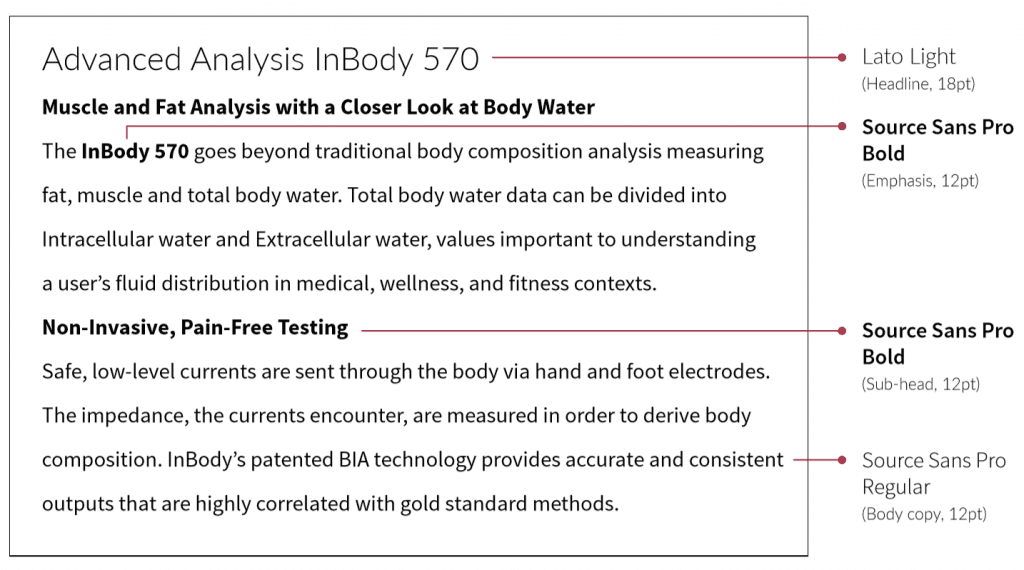
DO NOT use typefaces less than 8pt or 11px font.
DO NOT use hyphenations to avoid awkward sentence cut-offs.
Notes:
For print materials, use a thicker weight typeface to make it easier to read. Exception for headlines when above 12pt, use Lato Light.
If the headline is less than 12pt, use Lato Regular for the best legibility.
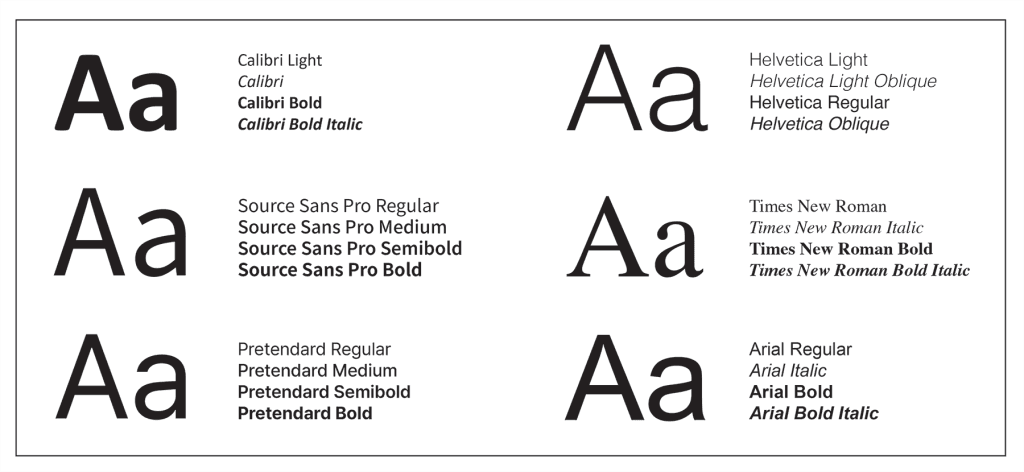
DO NOT use typefaces less than 8pt or 11px font.
DO NOT use hyphenations to avoid awkward sentence cut-offs.
Notes:
Alternative secondary fonts can be used for both digital and printed documents: Calibri, Helvetica, San Source Pro, Times New Roman, Pretendard, and Arial. DO NOT use Helvetica Condensed.

PANTONE MATCH - PQ-7427C - official brand color (i.e. public display signs, convention collaterals, etc.)

CMYK - 0 | 100 | 65 | 40 - for print media (ie. catalog, poster, business cards, paper marketing materials, etc.)

RGB - 151 | 27 | 47 - for screen monitor (i.e. presentations, computer, TV, mobile device screens, etc.)

HEX - #971B2F - for web design (i.e. websites, digital assets, etc.)

RAL - 3003 - for paintings and powder coatings (i.e. public display signs, convention collaterals, etc.)
Notes:
“InBody Red” is our primary brand color and should not be altered. Brand color is a crucial part of our brand identity.

WHITE - a dominant background color

LIGHT GRAY - for soft gradient and background colors (DO NOT use for text)

COOL GRAY - for background colors and graphic icons

DARK GRAY - for background color and graphic icons

BLACK - for text and graphic icons

ICE GRAY - for background colors and graphic icons
Notes:
Secondary colors are the baseline but can be adjusted to fit your design. For gray colors, you may select a neutral shade in order to keep the design within the primary (light) and secondary (dark) look, even if it's not any of the color codes above. We can adapt the identity of InBody to fit different needs, but to stay true to the brand we must follow a set list of options. See below.

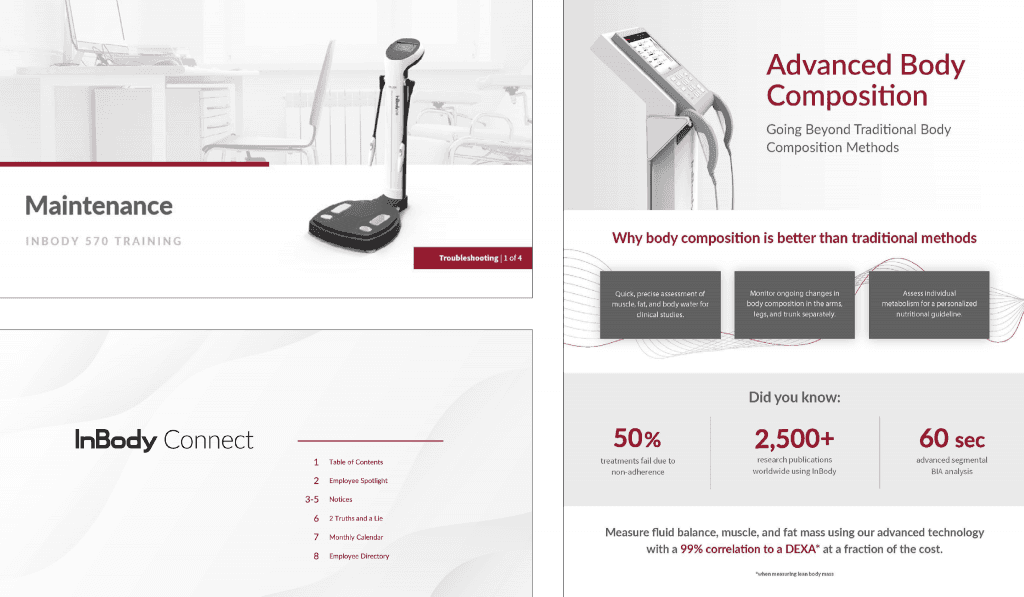
Notes:
Primary style entails a color scheme in which our InBody Red is used as an accent color with a predominantly white palette. The purpose of our Primary style is to achieve a modern, clean aesthetic appropriate for a medical device company.
Primary style is mainly used on collateral to present our brand as a medical device company but can be used for a variety of applications. InBody Red is used as an accent color in logo(s), icons, and copy for emphasis/highlighting key points.
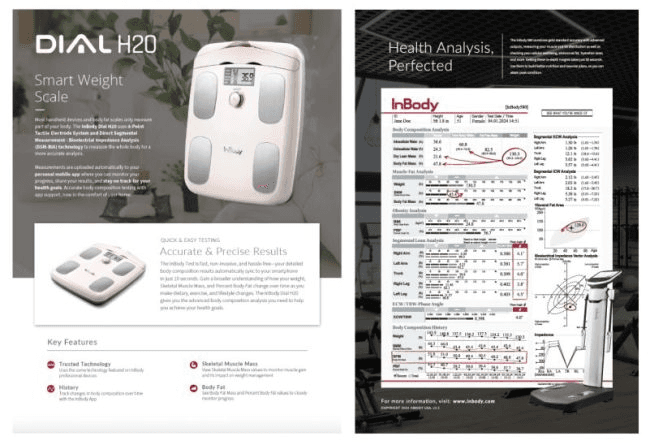
Notes:
B2B style entails a color scheme in which our dark gray overlay aesthetic is used predominantly with a colored image background. DO NOT substitute any other color for dark overlays. DO NOT use dark gray as a solid or opaque color background.
The purpose of our B2B style is to deliver a sleek, sophisticated aesthetic to impart a premium feel. B2B style is suggested for fitness and corporate wellness audiences, but can also be used for a medical audience.
B2B style can also be used to present our brand as a medical device company, but primarily used whenever a stock image or background (featuring a location or people) is part of the design; therefore, a dark overlay is used. InBody Red is used as an accent color in logo(s), icons, and copy for emphasis/highlighting key points.

Notes:
B2C style entails a dark color scheme and the use of gradients (blue to pink and pink to yellow). In general, the B2C style is more flexible than other styles, catering to the general consumer rather than business or medical professionals.

When using icons to highlight InBody product features, keep the lines the same width and the graphics simple and easy to understand. Icons can be used with backgrounds or outlines of two shapes (a square with radius corners or a circle) or as standalone icons.

Tone: Choose images with neutral tones.
Theme: Health and Weight Loss

Lighting: Choose images with natural and soft lighting.
Theme: Office Space and Business Solutions

Diversity: Choose images showing diversity in race, gender, and ethnicity.
Theme: Medical and Research

Context: Choose settings that pertain to specific industry/topic.
Theme: Health and Medical
Notes:
When choosing stock images, be aware of lighting, composition, diversity, and context that caters to a specific industry.
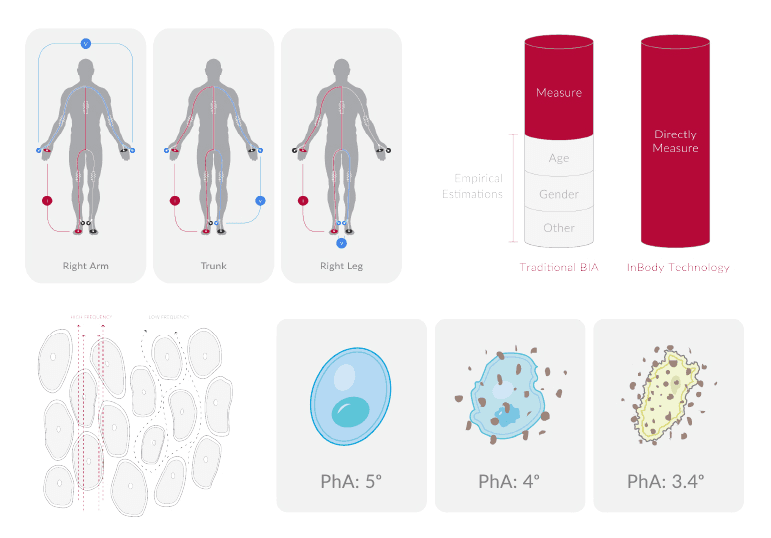
Notes:
Illustrations for clinical, research, and educational purposes are kept simple with thin lines and neutral gray color palette. The overall look and feel is medical and semi-realistic. The use of color other than white and gray should be limited for emphasis or accent purposes.
Refer to here and here for brand color codes.
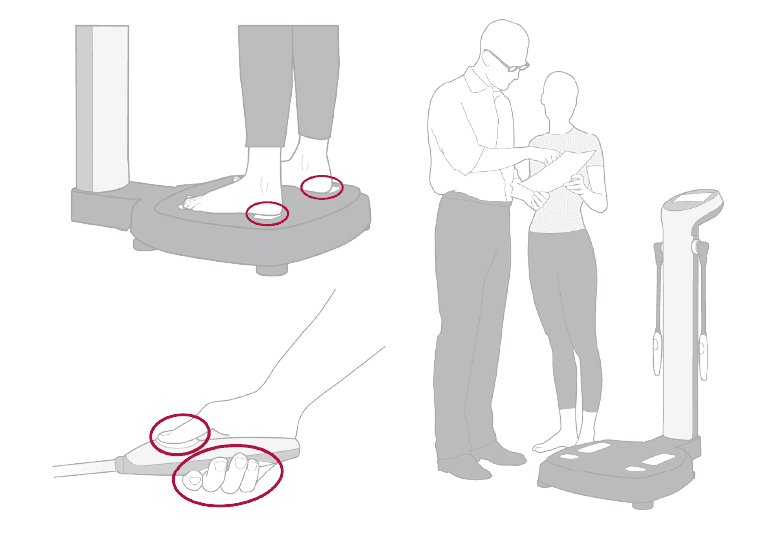
Notes:
Illustrations for manuals, how to test flyers, and banners are kept simple with a limited neutral gray color palette and a hint of InBody Red for focal points. Refer to here and here for brand color codes. For added complexity, illustrate products and models realistically with thicker line art. This will help users understand how to use or test on our devices with realistic visuals
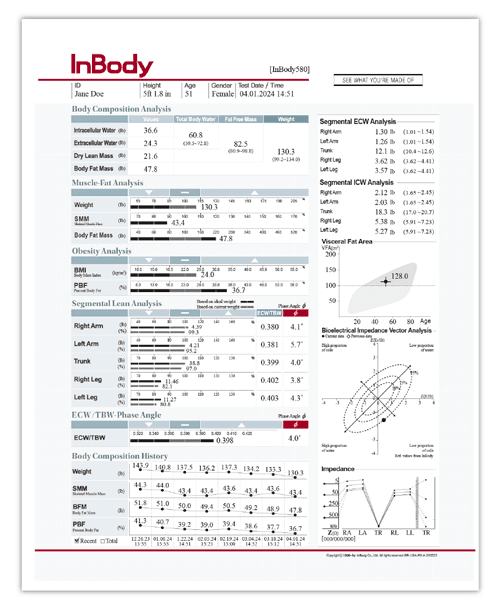
The InBody Result Sheet is predominantly white and light gray. To bring focus to different sections, add a light shadow. Shadow color is dark gray, refer here for secondary brand color codes.
For Powerpoint: When adding shadows to a Result Sheet image on Powerpoint use the following:
PowerPoint > Format Shape > Presets > Outer > Offset: Bottom Right
Notes:
When designing with a Result Sheet, always use a JPEG or PNG file.
DO NOT embed PDF or Illustrator file of Result Sheet to design to prevent unauthorized use of the template.
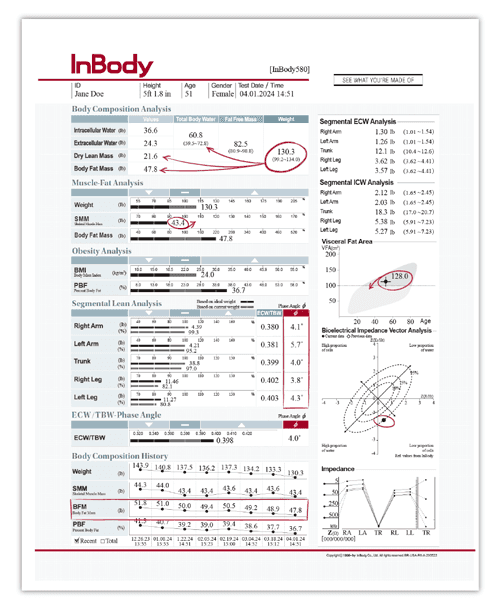
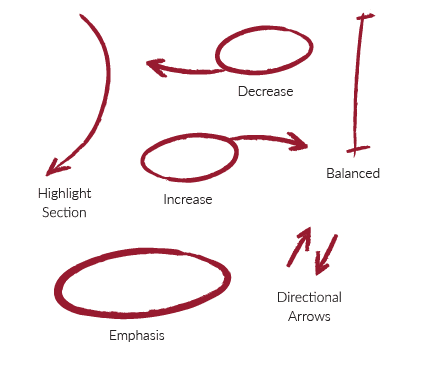
In Illustrator/Photoshop: Use chalk, round 2 brush texture stroke, to create a handwritten mark.
Notes:
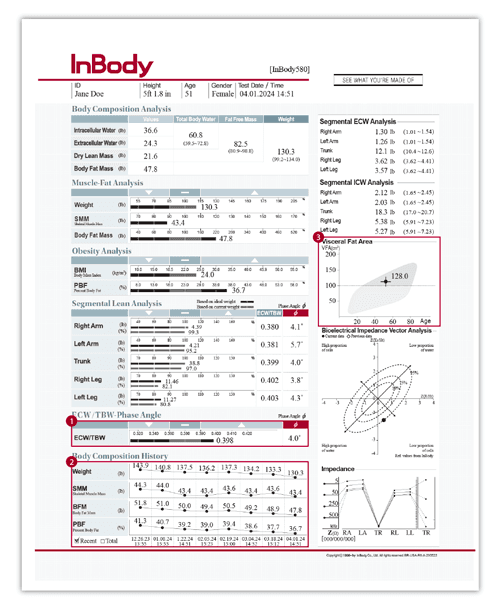
InBody 580 Result Sheet Interpretation
ECW/TBW Analysis
Helps professionals analyze and assess the presence of swelling or inflammation.Body Composition History
Tracks changes to your Weight, Skeletal Muscle Mass, Percent Body Fat, and ECW/TBW.Visceral Fat Area
Helps health professionals assess and anticipate multiple health risks and diseases.
Notes:
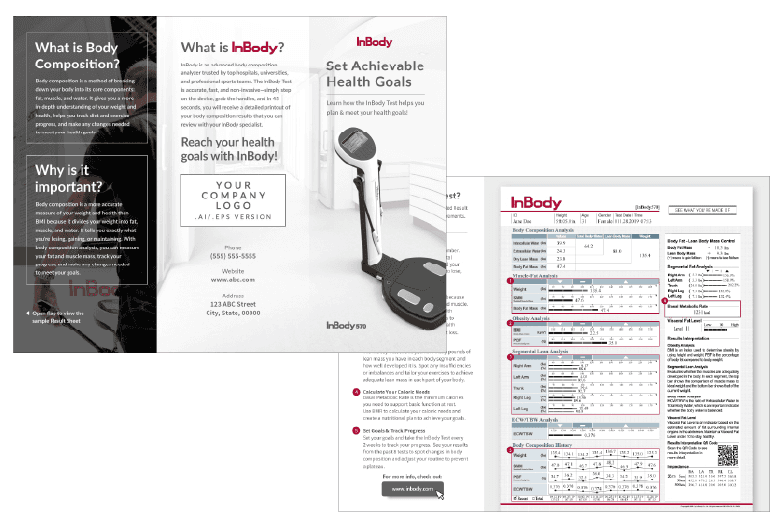
Notes:
Example of marketing print material shown on right, utilizing Color Palette 1; refer here.
Subtle gradient on lifestyle image (back page) and Result Sheet (cover page); refer here.
Lifestyle image edited to neutral gray (back page); refer here.
Result Sheet designed with interpretation (inside spread); refer here.
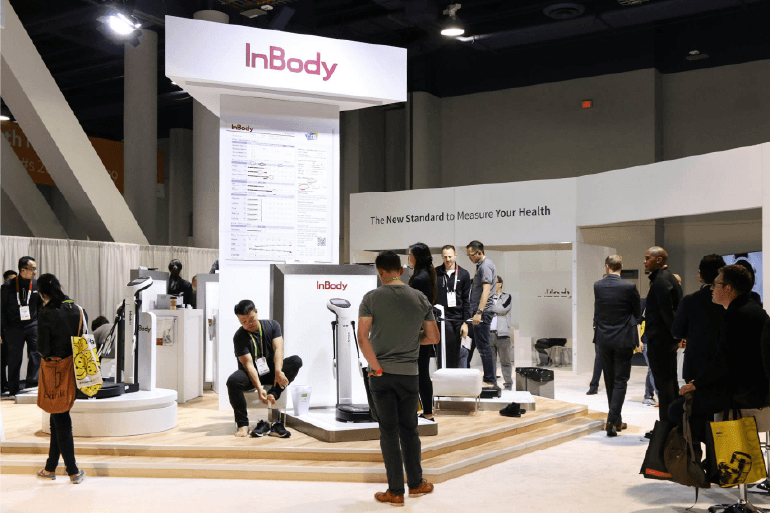
Notes:

Notes:
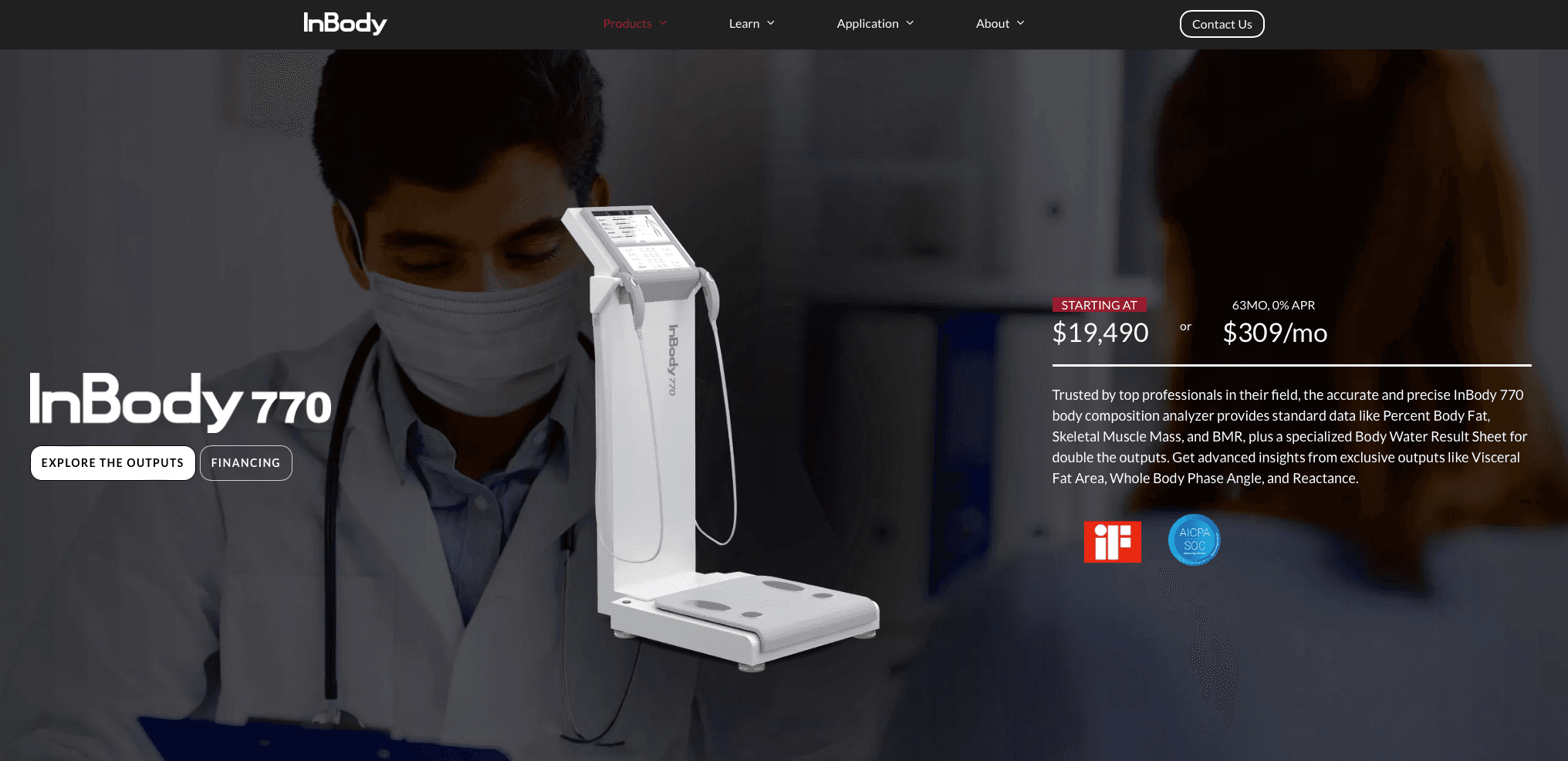
The InBody 770 product page shows the device in front of a medical backdrop.
We darken the background image and reduced the opacity to bring focus to product and text.
Notes:
Single product shots on a contextual setting helps the audience to better visualize our devices in use.
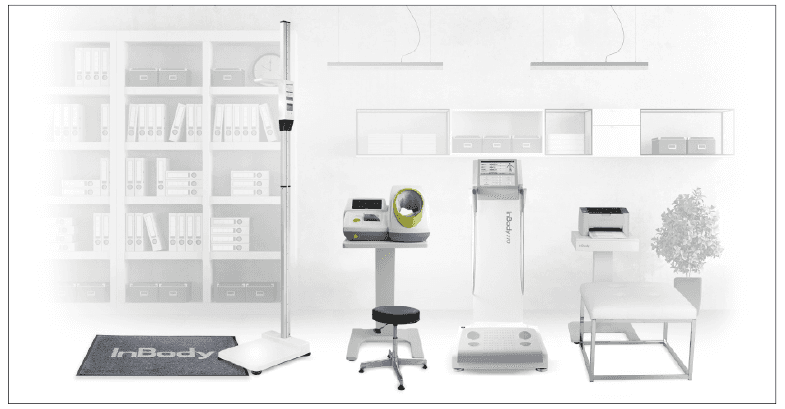
The InBody 770 product page shows the illusion of the device on a platform in front of a medical research facility.
We edit the background image to grayscale and reduced the opacity to bring focus to product and text.
Notes:
When featuring multiple devices together, be aware of perspective, lighting and height proportions for each device.

Writing for Social Media: Overview